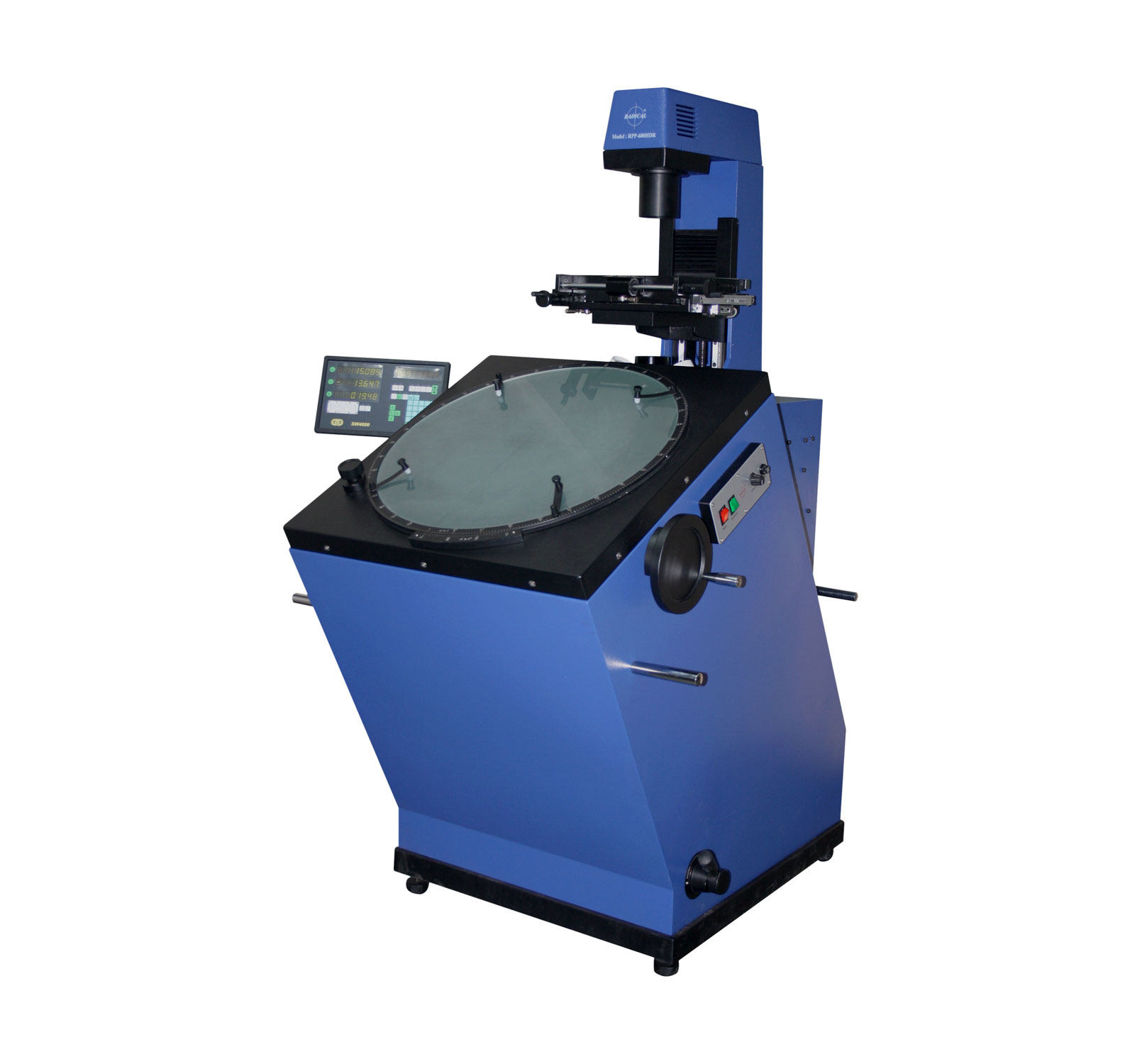
How to Choose the Right Optical Comparator for Your Workshop
By Radical Scientific — Applications TeamPublished: 15 June 2026
Focus: A practical step-by-step buying guide to help quality engineers, workshop managers, and production teams in India choose the right optical comparator — covering workpiece type analysis, screen size selection, magnification requirements, stage travel, DRO specification, supplier evaluation, and total cost of ownership.
An optical comparator — also called a profile projector — is one of the most cost-effective precision measurement instruments available to Indian manufacturers. Compared to Coordinate Measuring Machines (CMMs) or vision systems, a well-specified optical comparator delivers fast, reliable, non-contact dimensional inspection at a fraction of the cost, with virtually no operator training requirement. But choosing the wrong model for your application — wrong screen size, wrong magnification, wrong orientation — leads to frustration, inaccurate results, and wasted investment.
This guide answers every question a first-time or repeat buyer needs to answer before placing an order.
What is an optical comparator?
An optical comparator is a precision metrology instrument that projects a magnified silhouette of a workpiece onto a large illuminated screen. The operator measures the projected image — lengths, angles, radii, thread profiles, gear tooth forms — using graduated overlays or a digital readout (DRO) system. There is no physical contact with the component, which eliminates any risk of surface damage and allows inspection of delicate or soft workpieces.
The terms optical comparator and profile projector refer to the same instrument. "Optical comparator" is common in North America and Indian engineering literature; "profile projector" is the preferred term in European and Japanese standards. Both perform identical functions.
Key advantage over contact methods: An optical comparator measures the complete profile of a component in a single setup — not just individual point dimensions. This makes it uniquely valuable for complex forms, threads, gear teeth, and contoured profiles where contact measurement would require multiple setups and specialised gauges.
Step 1 — Analyse your workpiece type first
The single most important factor in optical comparator selection is the geometry of the workpieces you need to inspect. Every other specification — screen size, magnification, orientation — follows from this analysis.
Flat and irregular components
Stampings, sheet metal parts, moulded plastics, punched profiles, PCBs, washers, gaskets, small gears and discs, drilled plates — all of these rest naturally on a horizontal stage. A vertical profile projector (benchtop or floor-standing) is the correct choice. The workpiece lies flat, illuminated from below, and the silhouette is projected upward onto the screen.
Cylindrical and shaft-type components
Screw threads, turned shafts, hobs, lathe tool tips, cylindrical cutters, and any rotationally symmetric component with a longitudinal profile — these are best inspected on a horizontal profile projector. The workpiece is mounted vertically in V-blocks or between centres. The horizontal optical beam passes through the workpiece axis, projecting the profile onto a screen at the far end of the instrument.
Mixed workload
If your workshop inspects both flat stampings and turned cylindrical parts in significant volume, the practical solution is either two instruments — one vertical, one horizontal — or a vertical projector with a rotary stage and V-block fixture set for occasional cylindrical inspection.
Workpiece Type
Examples
Recommended Type
Flat stampings
Sheet metal parts, brackets, washers
Vertical (benchtop or floor)
Moulded parts
Plastic components, rubber seals
Vertical benchtop
Small precision parts
Watch components, surgical instruments
Vertical benchtop
Screw threads
Bolts, taps, dies, threaded shafts
Horizontal
Turned shafts
Cylindrical parts, stepped shafts
Horizontal
Hobs & gear cutters
Hobbing cutters, milling cutters
Horizontal
Large automotive parts
Connecting rods, cam profiles
Vertical floor-standing
Step 2 — Choose the right screen size
Screen diameter is the defining specification of an optical comparator. It determines the maximum measuring field at a given magnification and the physical size and cost of the instrument. Larger screens do not automatically mean better measurement — they mean a larger effective measuring field and greater reading ease for the operator.
Screen Size
Best For
150 mm – 250 mm
Small precision parts, watches, instruments
300 mm
General workshop inspection, small-medium parts
400 mm
Medium production components, automotive parts
500 mm
Large stampings, aerospace profiles
600 mm
Very large components, floor-standing use
A common mistake is choosing a screen that is too small — the operator then needs multiple setups to measure a single component, reducing throughput and increasing measurement uncertainty. When in doubt, choose the next screen size up. Stage travel doesn't scale predictably with screen size — it varies by model and configuration, so confirm the X-Y travel for the specific model you're evaluating against your largest workpiece dimension.
Step 3 — Specify the magnification
Magnification determines how much the projected image is enlarged relative to the actual workpiece. Higher magnification reveals finer detail and allows measurement of smaller features but reduces the field of view on the screen.
Magnification
Application
Smallest Feature Readable
10×
General inspection, stampings, mouldings
~0.1 mm
20×
Medium precision parts, small profiles
~0.05 mm
25×
Thread inspection, fine profiles
~0.04 mm
50×
Precision threads, gear tooth form
~0.02 mm
100×
High-precision micro-components
~0.01 mm
Most general-purpose workshops need 10× and 20× as standard lenses, with 50× or 100× as optional additions for thread and gear inspection. Choose a model with interchangeable lens mounts so you can add magnification levels as your requirements evolve.
Step 4 — Digital Readout (DRO) and data output
The DRO system is the measurement brain of the optical comparator. Modern DRO units offer far more than simple X-Y displacement reading. When evaluating DRO specifications, look for:
Resolution: 0.001 mm (1 µm) is standard. Verify this is the encoder resolution, not just display resolution.
Geometric functions: Diameter calculation, angle measurement, radius measurement, distance between points — these should be built-in, not optional extras.
Tolerance display: Go/No-Go tolerance indication against nominal dimensions speeds production inspection significantly.
Data output: RS-232 or USB output to connect the DRO to a PC for SPC data collection and quality records — essential for ISO and IATF quality systems.
Rotary screen encoder: Automatic angular reading when the screen is rotated, without manual vernier reading — saves time and eliminates angular reading errors.
Step 5 — Match to your industry application
Different industries have distinct requirements that should influence your final specification:
Automotive components
High-volume stamped metal parts, brackets, clips, and gaskets — vertical floor-standing projector with 500–600 mm screen, 10× standard lens, DRO with tolerance display and data output. Stage load capacity of 10–20 kg to handle fixture weight.
Tool and die / mould making
Complex punch profiles, die inserts, electrode forms — vertical benchtop with 300–400 mm screen, 10× and 20× lenses, surface illumination for reflective tooling steel surfaces.
Thread and fastener inspection
Screw threads, taps, dies, threaded inserts — horizontal projector with thread measurement overlays, 25× and 50× lenses, V-block and centre fixture set.
Precision engineering and instruments
Watch parts, surgical instruments, scientific components — benchtop vertical projector with 200–300 mm screen, 50× or 100× lens, fine stage movement with 0.001 mm DRO.
Aerospace and defence
Large profile components, complex aerofoil sections — floor-standing vertical projector with 600 mm screen, multiple magnification lenses, traceable calibration certification.
Electronics and PCB inspection
PCB hole patterns, connector profiles, SMD component inspection — vertical benchtop with surface illumination, 10× to 20× magnification, DRO with point-to-point distance function.
Step 6 — Evaluating suppliers in India
The optical comparator market in India includes domestic manufacturers, importers, and trading companies. Understanding the difference is critical to making a sound long-term investment.
What to ask every supplier
Are you the manufacturer or a trading company? Domestic manufacturers can support spare parts, service, and calibration far more reliably than importers who depend on overseas supply chains.
What is the service response time in my city? An optical comparator on a production floor must be maintained and calibrated regularly. Confirm the supplier has service engineers in your region.
Is calibration traceable? For ISO 9001, IATF 16949, or AS9100 certified facilities, your measurement equipment must be calibrated against national or international standards. Confirm the supplier provides traceable calibration certificates.
What is the warranty period and what does it cover? Optics, stage mechanics, DRO electronics, and illumination should all be covered clearly.
Can I see a working demonstration? A reputable supplier will always demonstrate the instrument on your actual workpieces before purchase. If a supplier refuses a demonstration, treat this as a red flag.
Tip: Always request inspection of the telecentric lens system quality before purchase. Poor telecentricity — common in low-cost imported instruments — causes magnification errors that increase with workpiece height variation. This error is invisible in casual use but causes systematic measurement inaccuracies in production inspection.
Complete buying checklist
✓ Workpiece Analysis
Flat/irregular → Vertical projector
Cylindrical/threaded → Horizontal projector
Maximum workpiece size confirmed
Heaviest workpiece weight noted
✓ Screen & Optics
Screen size selected (300–600 mm)
Standard magnification (10×, 20×)
Optional lenses (50×, 100×) if needed
Surface illumination if needed
✓ DRO & Data
0.001 mm resolution confirmed
Geometric functions included
Tolerance display available
USB/RS-232 data output
✓ Supplier Check
Manufacturer (not just trader)
Service engineers in your region
Traceable calibration certificate
Live demonstration on your parts
Optical comparators from Radical Scientific
Radical Scientific manufactures a comprehensive range of profile projectors and optical comparators for every application and budget, across vertical and horizontal configurations. Digital readout (0.001 mm resolution), surface illumination, and other higher-specification features are available across the range — some as standard, some as options depending on the model — so confirm the exact configuration for the specific model you're evaluating.
For full specifications, drawings, and pricing of any model, contact our applications team directly — we will recommend the right instrument for your specific workpieces and inspection requirements.
Frequently asked questions
What is an optical comparator used for?
An optical comparator is used for non-contact dimensional inspection of precision components — measuring lengths, angles, radii, thread profiles, gear tooth forms, and complex contour profiles by projecting a magnified silhouette of the part onto a screen.
What is the difference between a profile projector and an optical comparator?
They are the same instrument. "Optical comparator" is the common term in North America and Indian engineering literature; "profile projector" is preferred in European and Japanese standards. Both perform identical measurement functions.
Which optical comparator is best for inspecting stamped metal parts?
A vertical benchtop or floor-standing optical comparator with a 300–500 mm screen and 10× to 20× magnification is ideal for stamped metal parts. The flat workpiece rests on the horizontal stage and the silhouette projection clearly shows edge profiles, hole positions, and form dimensions.
How do I choose the right screen size for an optical comparator?
Choose screen size based on your largest workpiece and required measuring field. A 300 mm screen suits small precision parts; 400–500 mm suits medium production components; 600 mm is for large automotive or aerospace profiles. When in doubt, select the next size up to avoid multiple setups per part.
What magnification do I need for thread inspection?
Thread inspection typically requires 25×, 50×, or 100× magnification depending on thread pitch and size. For M-series metric threads above M6, 25× is usually sufficient. For fine-pitch threads and micro-fasteners, 50× or 100× may be needed. A horizontal profile projector with thread overlay chart is the recommended configuration.
How much does an optical comparator cost in India?
Contact Radical Scientific at 1800-1233-229 or info@radicalscientific.com for current pricing and model recommendations tailored to your application and budget.